Édouard-Marcel Sandoz
If you have notes on accuracy, content, site links, or any other requests regarding this page, please get ahold of us at contact@hamiltonandsonsauctions.com.
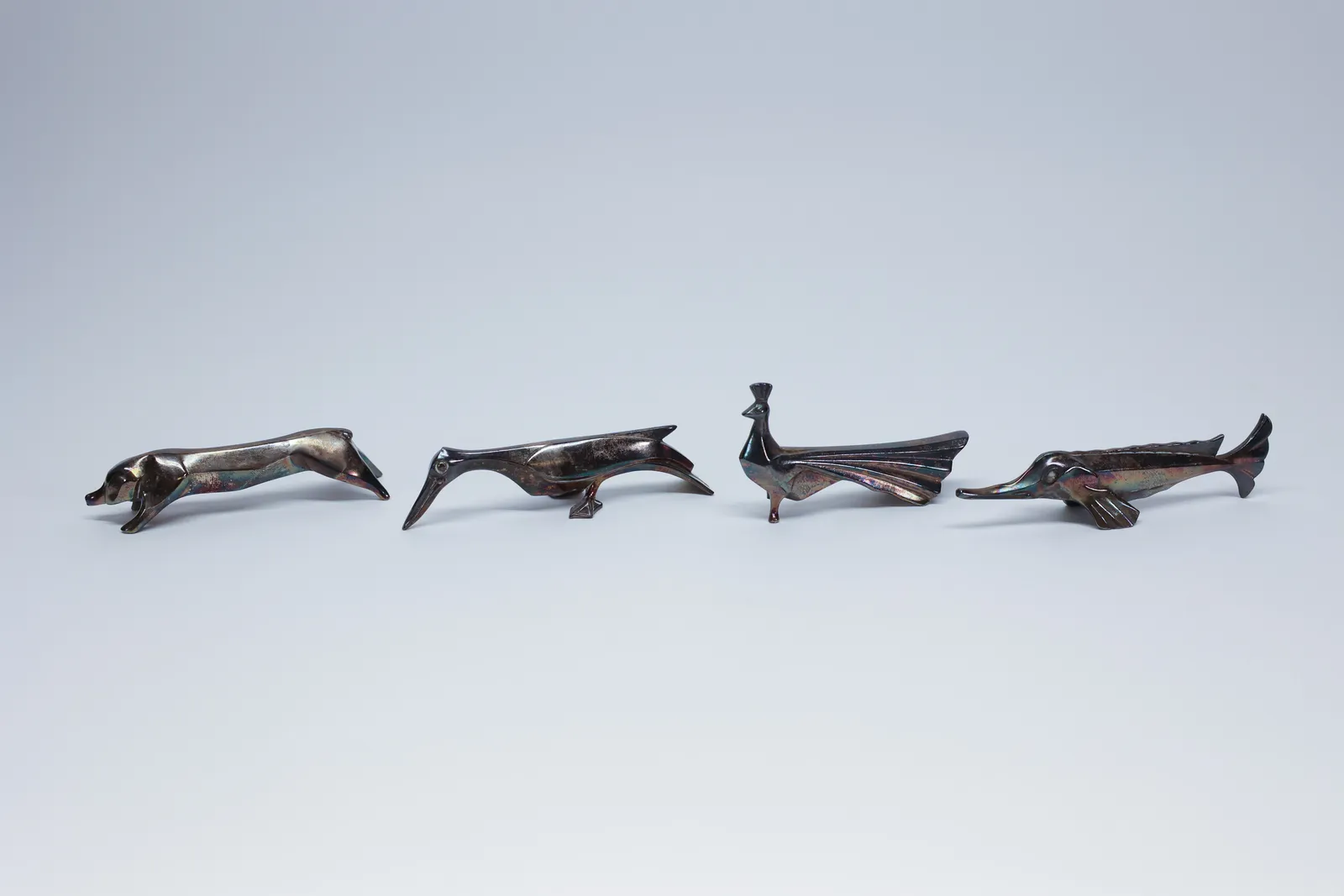
Édouard-Marcel Sandoz was a Swiss sculptor and painter, born in Basel on 21 March 1881 and died in Lausanne on 20 March 1971. He was the son of the entrepreneur Édouard Constant Sandoz, co-founder of the chemical and later pharmaceutical company Sandoz, and the brother of the author Maurice-Yves Sandoz. He trained at the Haute école d'arts appliquées in Geneva before moving to the École des Beaux-Arts in Paris, where he studied with the sculptors Antonin Mercié and Jean-Antoine Injalbert. He settled in Paris in 1908 and worked there for much of his life, becoming one of the leading animalier sculptors of the twentieth century.
Sandoz built his reputation on sensitive, stylized depictions of animals, particularly foxes, rabbits, cats, and exotic birds, rendered in bronze, porcelain, and hardstone. During the First World War, a shortage of stone and bronze led him to turn to porcelain for his sculptures, beginning a thirty-year association with the Haviland company in Limoges, and his present reputation rests largely on this body of work, especially his animal representations, which made him a leading figure among the French "animaliers." His personal style bears the imprint of the Art Nouveau period, and his focus on animal subjects led him to found the French Society of Animalists in 1933.
Collectors prize Sandoz pieces for the sculptor's remarkable versatility and technical range: he adapted his technique to work with bronze, glass, and porcelain alike, as well as wood, semi-precious stones and other materials, with a particular strength in selecting the right medium for each subject. He was honored during his lifetime with national awards including the Légion d'Honneur, and his career was further marked by election to the Academy of Fine Arts and the title of Commander in the Order of Arts and Letters, cementing his standing as one of the foremost decorative sculptors of his era.
Sources: