Han Suyin
If you have notes on accuracy, content, site links, or any other requests regarding this page, please get ahold of us at contact@hamiltonandsonsauctions.com.
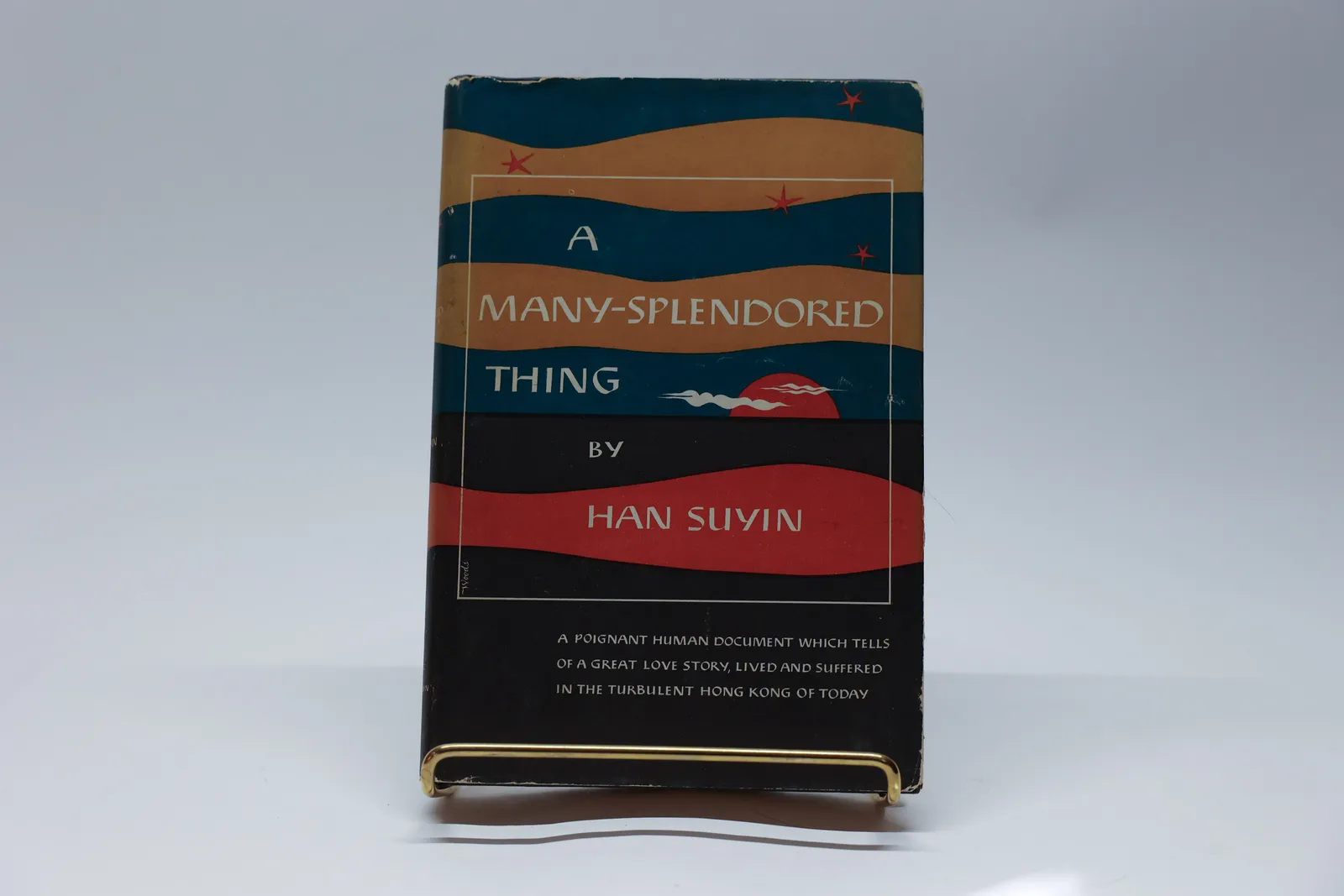
Han Suyin was the pen name of Rosalie Matilda Kuanghu Chou, later known as Elizabeth Comber, a Chinese-born Eurasian physician and author born 12 September 1917 or 1916 and dying 2 November 2012, a Chinese-born Eurasian physician and author better known by her pen name Han Suyin. She was born to a Chinese father and Belgian mother in Xinyang in the north-central province of Henan, qualified as a doctor in London, and thereafter moved to Hong Kong. She wrote in English and French on modern China, set her novels in East and Southeast Asia, and published autobiographical memoirs which covered the span of modern China, gaining her a reputation as an ardent and articulate supporter of the Chinese Communist Revolution.
Her breakthrough came with the largely autobiographical novel A Many-Splendored Thing, drawn from her own tragic wartime love affair in Hong Kong. Han drew on her deep sorrow to write this largely autobiographical novel, which closely mirrored their affair; the book was a huge success, earning a fortune for Han and establishing her international literary reputation by interweaving an intimate personal narrative with an objective report on modern Asia. Its fame was magnified when the commercial success of the novel was bolstered by a Hollywood film adaptation, Love is a Many-Splendored Thing (1955), starring Jennifer Jones and William Holden and directed by Henry King, which turned the story into a mid-century cultural touchstone even though Han disliked the film adaptation, though both novel and film made her an internationally recognized author, after which she diversified into roles as essayist, public intellectual, and international commentator on Asian affairs.
Beyond this signature work, Han Suyin produced a substantial body of fiction and nonfiction, including a multi-volume autobiographical history of modern China beginning with The Crippled Tree, which covers the years 1885 to 1928, beginning with the life of her father, a Belgium-educated Chinese engineer of Hakka heritage, and is the first book of Han's six-volume epic cycle on the modern history of China through the lens of her family. Her unique vantage point as a Eurasian woman moving between China, colonial Asia, and the West, combined with her firsthand access to figures like Mao Zedong and Zhou Enlai, made her a distinctive literary voice of the twentieth century, and early or inscribed editions of her best-known works remain sought after by collectors of modern literature and Asian historical writing.
Sources: