Fred Roberts Co.
If you have notes on accuracy, content, site links, or any other requests regarding this page, please get ahold of us at contact@hamiltonandsonsauctions.com.
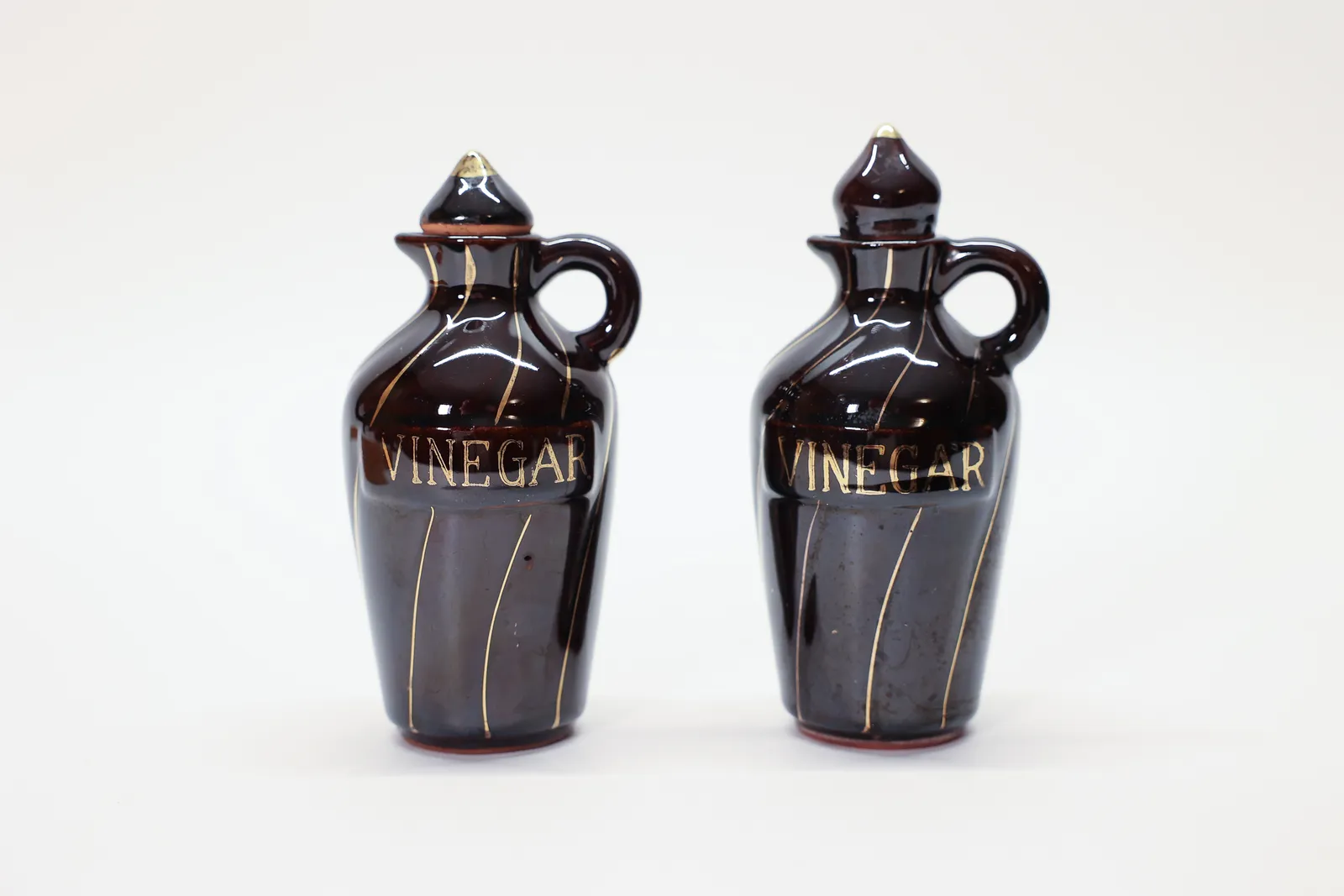
Fred Roberts Company was a San Francisco-based importer and distributor of ceramic housewares that was an importer from Japan established post-World War II. Rather than a maker in the traditional studio-pottery sense, the firm operated as a jobber that commissioned Japanese ceramic factories to produce glazed earthenware and porcelain goods bearing its name, which it then marketed to American kitchens and gift shops during the mid-twentieth century boom in imported tableware. Following the end of World War II and the surrender of Japan, companies like Fred Roberts began importing from Japan dishware, china and other items to the United States, part of a broader trade that helped rebuild the Japanese ceramics export industry.
The company's output was wide-ranging and largely aimed at the mid-century American kitchen and dining table, encompassing novelty kitchen items alongside more decorative wares. Among its best-known lines were figural condiment sets, cruets, decanters, salt and pepper shakers, teapots, mugs, and other whimsical or country-kitchen themed pieces, often stamped or foil-labeled "Fred Roberts Company, San Francisco, Made in Japan." This ultra mid century piece was sold by Fred Roberts of San Francisco who manufactured and imported their goods from Japan in the 1950s and 1960s. The firm later registered a trademark in the early 1980s, though its main period of ceramic production and distribution is generally associated with the 1950s through 1970s.
Pieces bearing the Fred Roberts mark are collectible today chiefly as examples of mid-century American kitchenware nostalgia and the broader postwar Japan-to-America import trade. Fred Roberts Co is known for various mid century ceramic and porcelain items, including decanters, and it is very collectible. Condition, completeness of sets, original paper or foil labels, and the charm of a particular novelty design (such as figural decanters or country-themed condiment sets) tend to drive collector interest and value.
Sources:
- Fred Roberts of San Francisco Vanity Dish. For Sale at Ruby Lane
- Fred Roberts San Fran MADE IN JAPAN Strawberries CRUET SET Circa 1950s – The Townhouse Antiques & Vintage
- Vintage Mid Century Fred Roberts Entertaining Set with Bar Utensils and Cheese | Shop THRILLING
- Vintage Liquor Decanter Fred Roberts Co - Etsy