Gallia
If you have notes on accuracy, content, site links, or any other requests regarding this page, please get ahold of us at contact@hamiltonandsonsauctions.com.
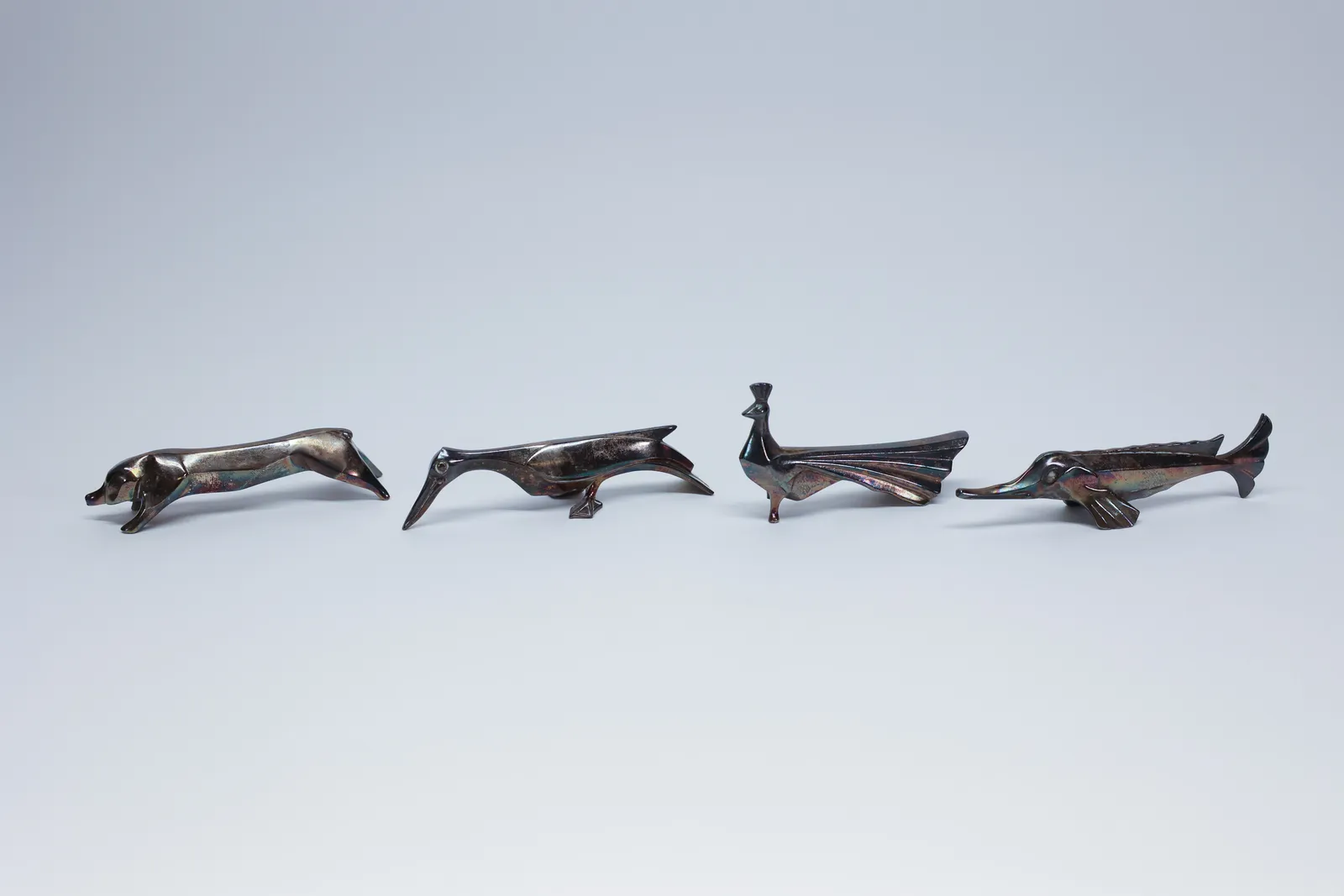
Gallia was the artistic silver-plate line of the French silversmith Christofle, created in the late nineteenth century to bring modern, sculptural design to the table at a more accessible price than the firm's luxury solid-silver wares. The line took its name from "Gaul" and used a patented copper-tin alloy, cast rather than hammered, which allowed for bolder, more sculptural forms than the nickel-silver commonly used elsewhere. Gallia was overseen by Félix Chéron, an experienced goldsmith who patented the alloy known as Gallia metal in 1896, a copper-tin blend that, unlike Alpacca, could be cast directly, allowing more sculptural forms at lower cost. The pieces were marked with a Gallic rooster and the Gallia name, and the workshop moved into Christofle's Saint-Denis factory in 1916 before being fully absorbed into the parent company by 1933.
Gallia's output spanned the Art Nouveau and Art Deco periods, and the brand became known for collaborating with prominent French designers and sculptors of the era, including Christofle's own artistic directors as well as independent artists commissioned for specific ranges. Among the most celebrated Gallia commissions were sets of stylized animal-form knife rests created by the Swiss sculptor Edouard-Marcel Sandoz, whose cubist-influenced menagerie of pigs, lions, bears, greyhounds, swans, and other creatures was produced for Christofle's Gallia line, reportedly including pieces destined for the first-class dining service of the ocean liner SS Normandie.
Despite being marketed originally as an affordable alternative to solid silver, Gallia's Art Deco figural pieces are now highly sought after by collectors of French decorative arts. Early models were highly decorative and today command far higher prices than contemporary luxury Christofle wares despite being marketed originally as "budget" pieces. Their collectibility rests on the combination of striking sculptural design, the involvement of noted artists such as Sandoz, and the historical significance of Christofle's role in modernizing French tableware design during the interwar decades.
Sources: