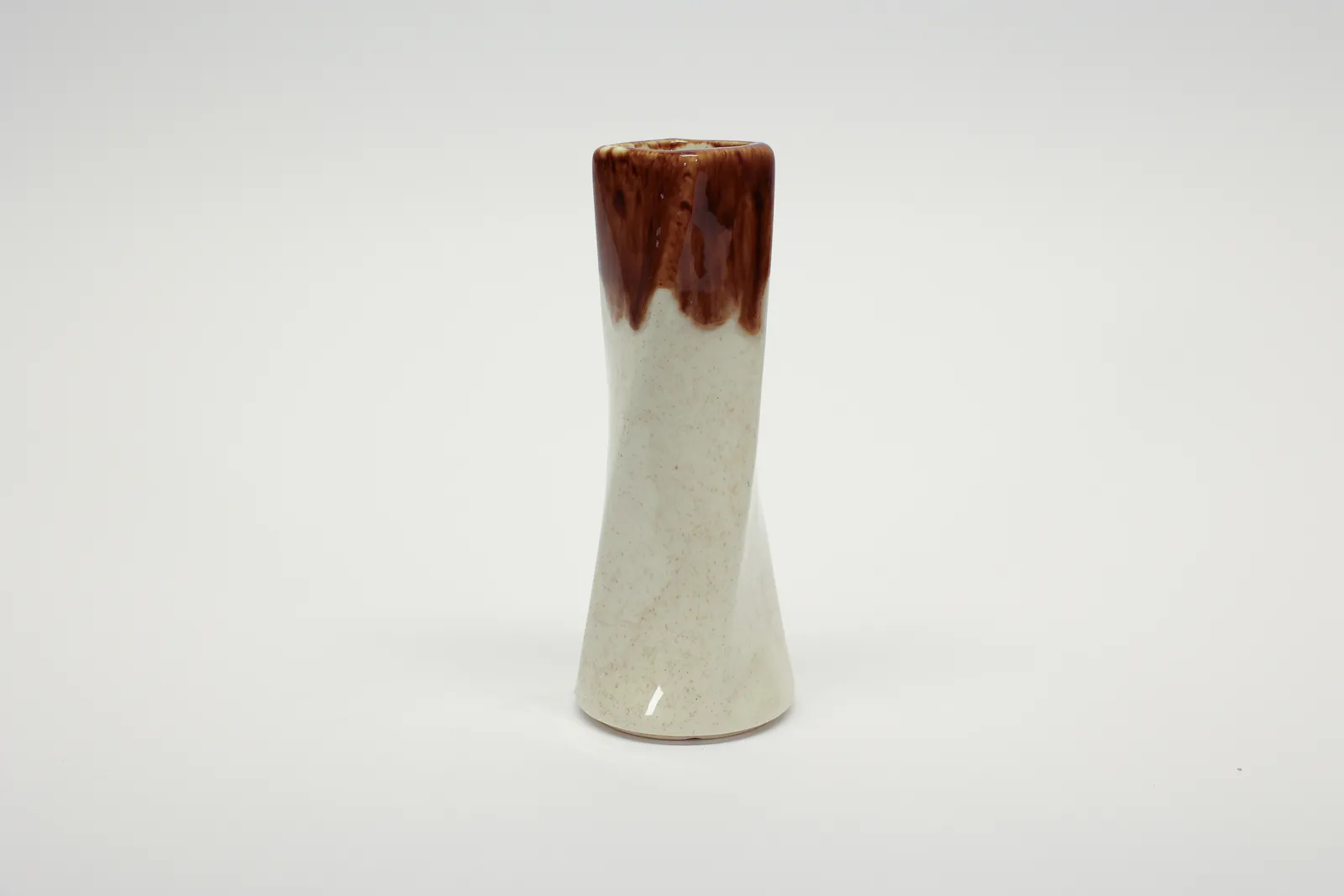
McCoy
If you have notes on accuracy, content, site links, or any other requests regarding this page, please get ahold of us at contact@hamiltonandsonsauctions.com.
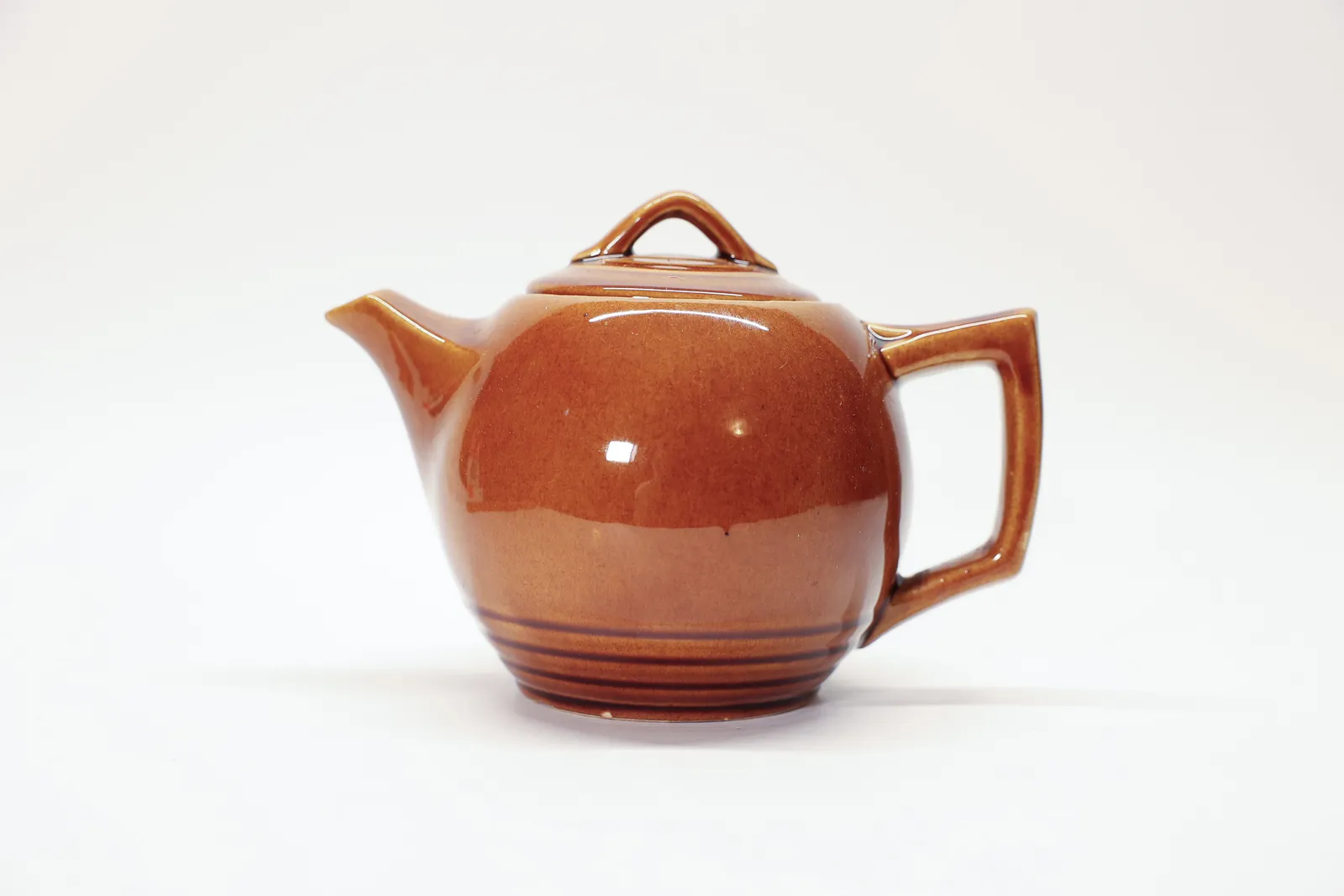
McCoy Pottery traces its roots to Ohio's rich clay region, where the McCoy family built one of America's most prolific ceramics enterprises. The story of the McCoy Pottery Company begins in 1848, with the founder William Nelson McCoy building a pottery factory in Zanesville, Ohio, producing functional items like jars, jugs, butter churns and crocks that were perfect for a growing nation. His son J.W. McCoy later moved to Roseville, Ohio in 1871 and opened a general store there in 1876, eventually building on this foundation to expand the family's pottery business. J.W. McCoy went on to assist his own son, Nelson McCoy, in founding the Nelson McCoy Sanitary Stoneware Company in 1910, which produced utility stoneware.
Over the following decades the company, commonly known simply as McCoy, grew into one of the best-known names in American art pottery. Unlike other storied American art potters such as Weller, Roseville, and Cowan, McCoy was less expensive and sold to the masses as wholesale pottery, making its glazed jardinieres, cookie jars, planters, and dinnerware fixtures of everyday American homes for much of the twentieth century. Virtually every piece of decorative pottery created by McCoy was machine-made in McCoy molds, fired in local kilns, and each bears a hallmark noting the art pottery.
Today McCoy pieces are widely collected for their nostalgic mid-century American charm, sturdy earthenware construction, and the sheer breadth of whimsical forms the company produced, from teapots and kettles to figural cookie jars. Because pieces were mass-produced across many decades and design lines, collectors especially prize examples in good condition with clear factory marks, as well as less common shapes and glazes such as the classic brown drip glaze seen on many of the firm's teapots and kitchenware.
Sources: