Roseville
If you have notes on accuracy, content, site links, or any other requests regarding this page, please get ahold of us at contact@hamiltonandsonsauctions.com.
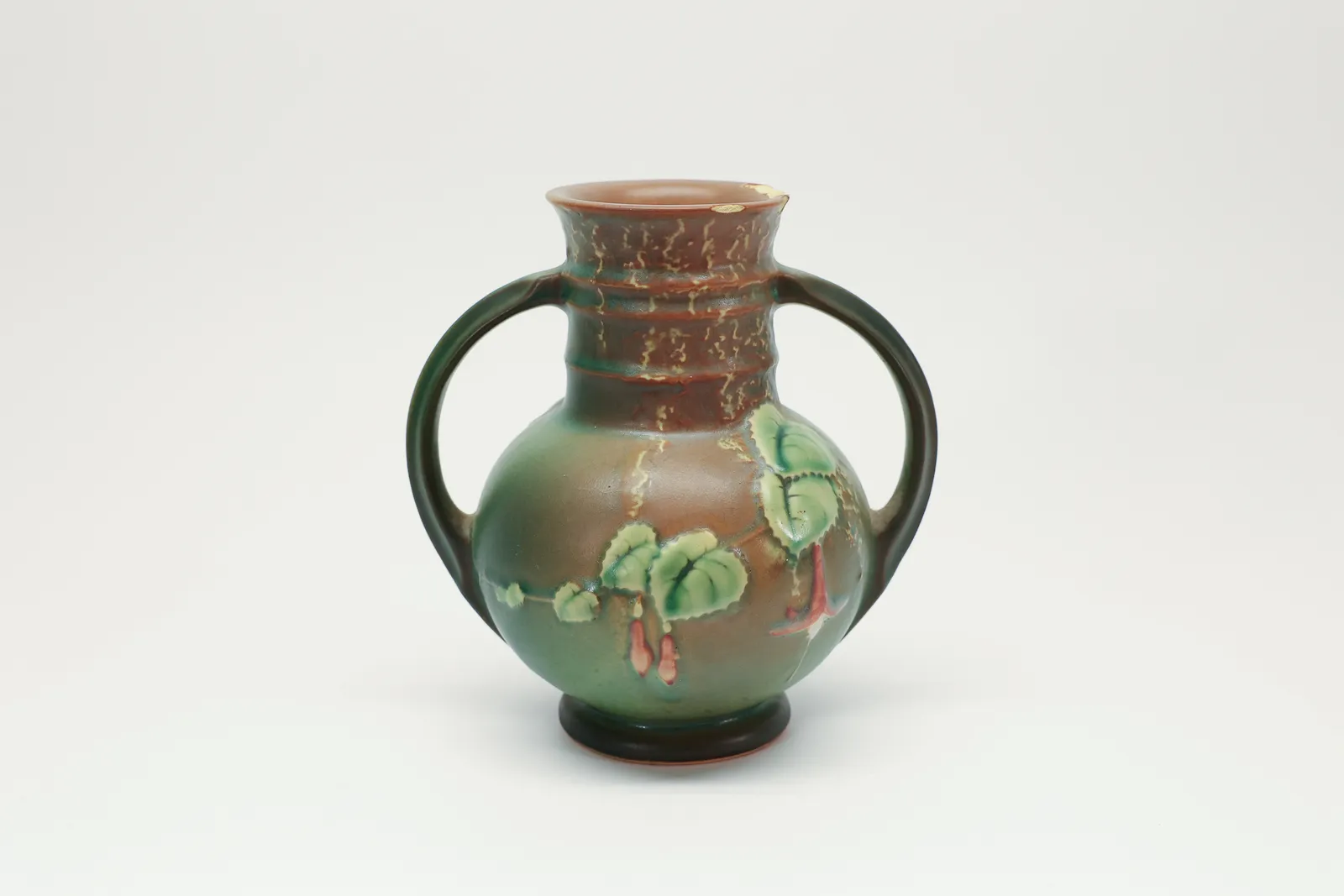
The Roseville Pottery Company was an American art pottery manufacturer active from the late nineteenth century through the mid-twentieth century, founded in 1890 in Roseville, Ohio, by J.F. Weaver and incorporated in 1892 under the direction of George Young, who became its secretary and general manager. Under the direction of Young, the Roseville company had great success producing stoneware flower pots and other practical household items. The firm expanded rapidly, and in 1898 purchased the Clark Stoneware Company in Zanesville, Ohio, and moved the headquarters there. It was there that the company transitioned from purely utilitarian wares into decorative art pottery, launching its influential Rozane line in 1900.
Along with Rookwood Pottery and Weller Pottery, it was one of the three major art potteries located in Ohio around the turn of the 20th century, and though the company originally made simple household pieces, the Arts and Crafts–inspired designs proved popular. A succession of talented art directors shaped its output, most notably the English-trained potter Frederick Hurten Rhead, who served in that role from 1904 to 1909 and is associated with the Della Robbia line, and designed or oversaw the Juvenile, Donatello, Mostique and Pauleo lines. Later, Frank Ferrell took over as art director in 1917 and became responsible for many of the company's most beloved patterns.
Roseville continued producing decorative art lines through the difficult economic years of the Depression and into the Second World War, introducing patterns such as Fuchsia, Cosmos, Columbine, White Rose, Bittersweet, and Zephyr Lily during that period, before finally ceasing operations in 1954 as cheaper imported wares undermined the American pottery industry. Despite the company's closure, Roseville pieces are now sought after by collectors for their distinctive hand-finished glazes, sculptural relief decoration, and the historical significance of the artists who worked there, making well-preserved examples of its named pattern lines especially desirable at auction today.
Sources: