Wallace
If you have notes on accuracy, content, site links, or any other requests regarding this page, please get ahold of us at contact@hamiltonandsonsauctions.com.
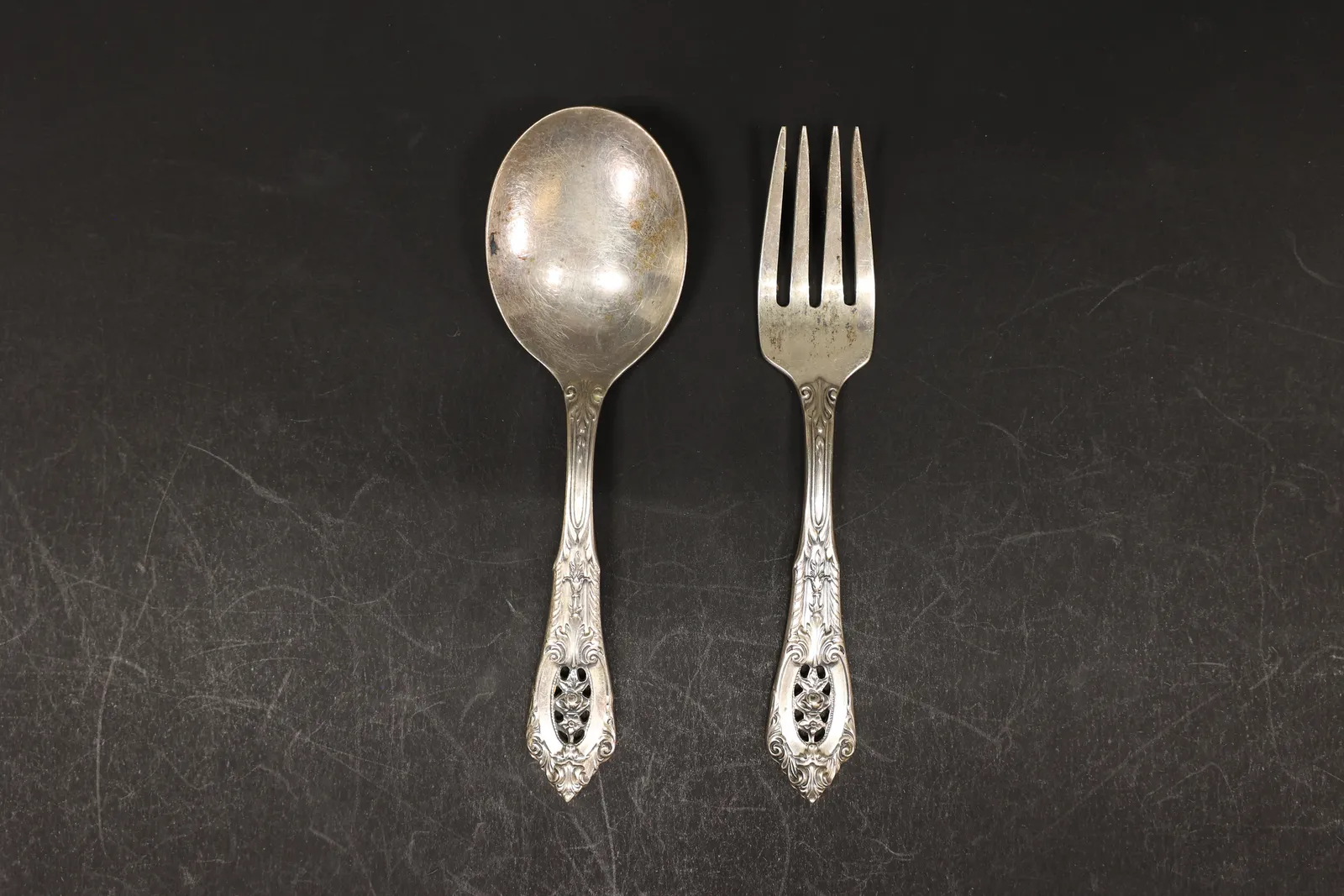
Wallace Silversmiths traces its roots to Robert Wallace, who began producing silver and silver-plated spoons in Wallingford, Connecticut, starting in the 1830s. Over the following decades the enterprise grew through several corporate names—R. Wallace & Sons, Wallace Brothers Silver Company, and eventually Wallace Silversmiths—as Wallace's sons and successors built it into one of the largest and most respected American manufacturers of sterling and silver-plated flatware and hollowware. Robert Wallace died in 1892, but his sons and sons-in-law carried on, building the firm into the world's largest producer of flat tableware.
The company earned a lasting reputation for both quality craftsmanship and design innovation, producing a long line of enduringly popular sterling flatware patterns. Rose Point (1934), Sir Christopher (1936), Stradivari (1937), Grande Baroque (1941), Grand Colonial (1942), and Romance of the Sea (1950) combine timeless elegance with the quality craft for which Wallace is known, and each remains among Wallace's most popular patterns. Wallace's Modernist silver designs in particular have drawn museum attention: many designs by R. Wallace & Sons, especially Modern ones, have been collected by American museums, including the Dallas Museum of Art, Wolfsonian FIU in Miami Beach, and the Mint Museum in Charlotte, and were featured in a traveling museum exhibition that toured institutions including the Smithsonian.
Pieces bearing the Wallace mark are collectible both for their fine sterling craftsmanship and for the historical significance of the firm, which remained independent of the larger International Silver Company conglomerate for most of its existence before later passing through corporate ownership including Hamilton Watch Company, Katy Industries, Syratech, and ultimately Lifetime Brands. Flatware and serving pieces in the firm's signature ornate Baroque and Colonial Revival patterns remain particularly sought after by collectors of American silver.
Sources: