Bill Reid
If you have notes on accuracy, content, site links, or any other requests regarding this page, please get ahold of us at contact@hamiltonandsonsauctions.com.
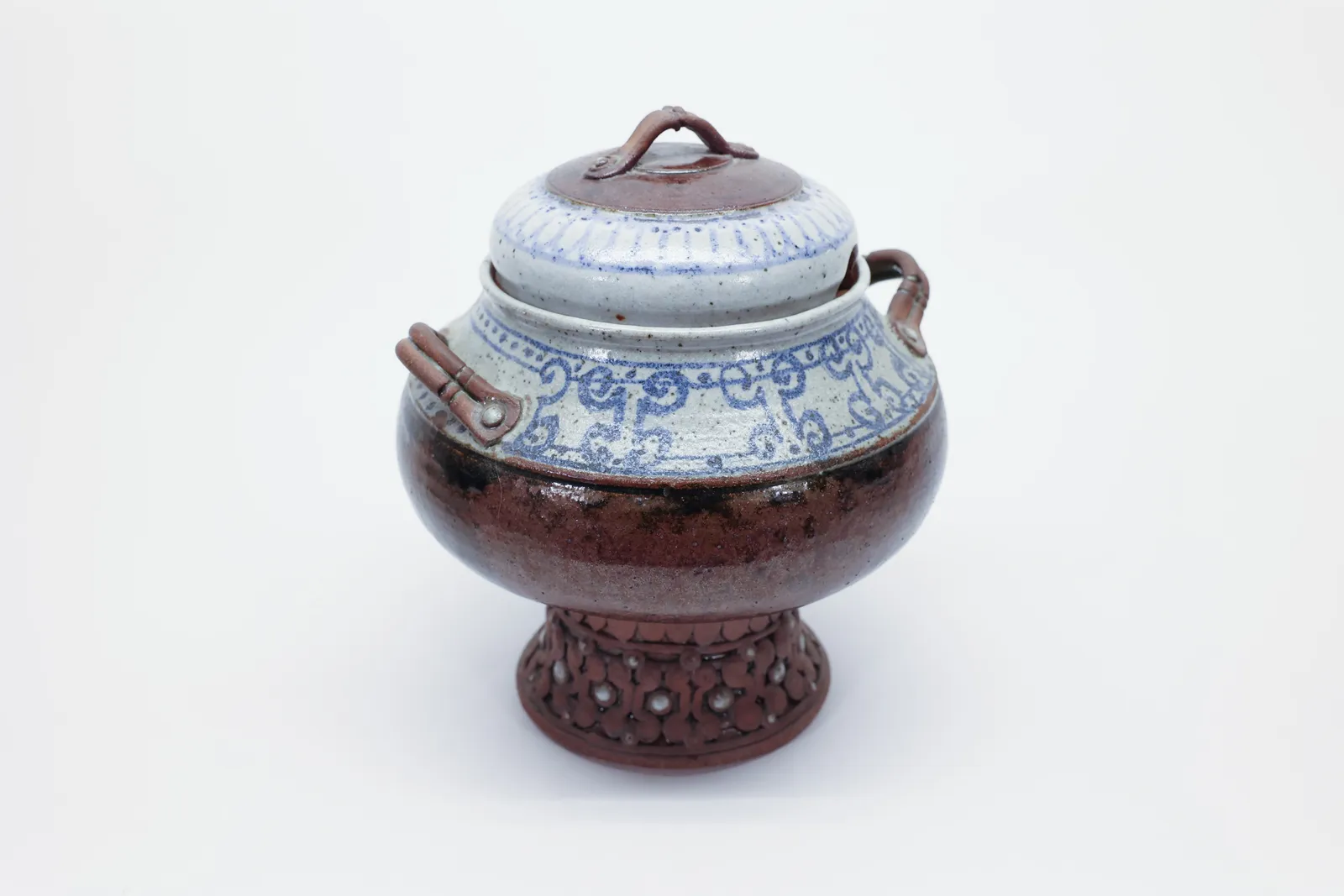
Bill Reid was an Australian studio potter whose distinctive career began in unusual circumstances: he lost his sight in Burma during the Second World War, and began potting in 1945 at Concord Repatriation Hospital in Sydney. Working from memory and touch, he developed a body of work that was recognized well beyond the rehabilitation setting in which he first learned the craft, and he was still working as a potter in 1981 when Leonie Lengert wrote an article about him in St Dunstan's Review.
Reid's most recognizable contribution to Australian studio pottery was a heavily textured surface treatment inspired by the natural world around him. His "bark" designs were created from Bill's memory of the trunk of the Australian Banksia trees before he lost his sight, his textured pottery looks and feels like the banksia tree trunks. This tactile, richly worked surface, often combined with rich iron glazes and hand-built forms, gives his pieces an unmistakable character that sets them apart from more conventionally thrown studio ware of the period.
Pieces by Reid are identified by his mark, an incised Bill Reid or Bill Reid QLD, and they remain sought after among collectors of Australian ceramics. His work has been exhibited around the world and in museums, and he is considered a very collectible Australian potter, with overseas collectors seeking out his work. The combination of his personal history, his inventive tactile approach to surface decoration, and the relative scarcity of his output has helped sustain interest in his pottery on the secondary market.
Sources: