Jordi Aguadé
If you have notes on accuracy, content, site links, or any other requests regarding this page, please get ahold of us at contact@hamiltonandsonsauctions.com.
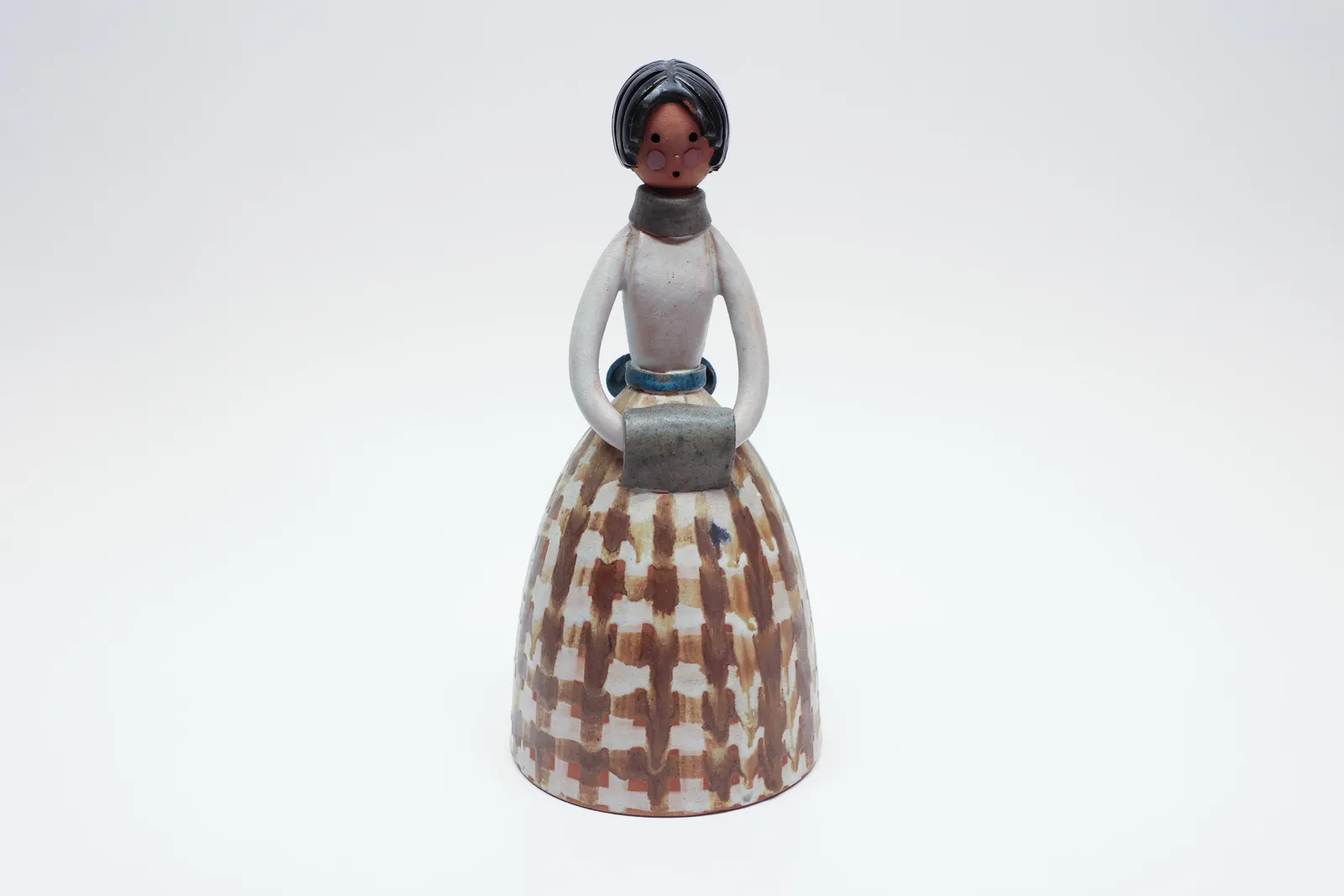
Jordi Aguadé i Clos was a Catalan ceramist born in Barcelona in 1925, whose long career made him one of the towering figures of twentieth-century Spanish studio pottery. Aguadé started as a potter apprentice in the studio of Josep Llorens Artigas, and he worked in it for ten years, during which he collaborated in doing several glazed pieces made by Josep Llorens Artigas and Joan Miró. He went on to broaden his training abroad, and continued his formation in the workshop of Philippe Rouard in Paris and at Tyra Lundgrens and Gocken Jobs in Sweden, absorbing the clean, folkloric forms of Scandinavian design that would color his own whimsical figurative work. Back home, he founded his own pottery studio in Barcelona in 1950.
In 1960 Aguadé became a founding member of La Cantonada, a multidisciplinary design collective; this group, formed by the ceramist Jordi Aguadé, the architect Jordi Bonet, along with other designers, was active from 1960 to 1975 and helped push Catalan craft toward more personal, small-batch production rather than standardized industrial design. Alongside his decorative tableware and figurines, he undertook major public commissions; one of the last and most important commissions he received was for 19 large pieces, three meters tall, for the central nave of the Sagrada Familia. His stature within Catalan art was formally recognized when on May 21, 2003, the Acadèmia Catalana de Belles Arts de Sant Jordi admitted him as a full member, a landmark moment because it represented ceramics entering the Academy for the first time, and again in 2015 when he received the Creu de Sant Jordi, one of the Catalan government's highest honors.
Aguadé died in 2021 at the age of 95 or 96, remembered as a master whose Horta workshop trained generations of younger ceramists. In his workshop many of today's ceramists worked, learning his rigorous and creative working methodology, and extraordinary pieces from his studio in Horta ended up in lobbies, facades, and homes across the country. His hand-modeled, glazed figures—often depicting stylized peasant women, mothers and children, or genre scenes rendered with earthy tones and folk-inspired patterning—are prized by collectors today as accessible, signed examples of a mid-century Catalan master's studio production, bridging the Noucentisme tradition of Artigas with a more personal, internationally inflected modern sensibility.
Sources: